
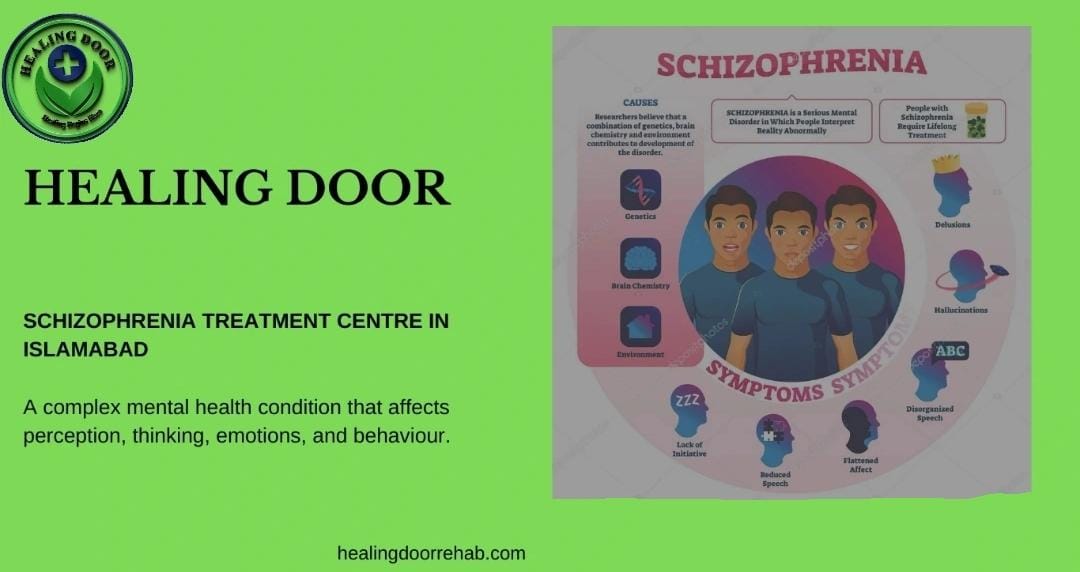
Certified Schizophrenia Treatment Centre in Islamabad with Experienced Psychiatrists
Schizophrenia is a complex mental health condition that affects perception, thinking, emotions, and behavior. People living with schizophrenia may hear or see things that others do not, struggle to organize thoughts, or withdraw from social connections. These symptoms can slowly interfere with daily life, making work, education, and relationships difficult to maintain. Seeking support from a schizophrenia treatment centre at an early stage helps reduce the intensity of symptoms and improves long-term outcomes.
Early care is important because schizophrenia often develops gradually. Families may notice changes in behavior, emotional expression, or communication long before the condition is clearly recognized. Without treatment, symptoms can worsen and lead to confusion, distress, or isolation. Early intervention provides stability, education, and reassurance to both patients and families. It also allows professionals to create treatment plans before symptoms become overwhelming.
Understanding schizophrenia as a medical condition helps remove fear and stigma. It is not caused by weakness or personal failure. With proper care, many individuals learn to manage symptoms, develop coping skills, and live meaningful lives. Early treatment builds a strong foundation for long-term recovery and emotional balance.
Why Specialized Treatment Centres Provide Better Outcomes
Schizophrenia requires ongoing and specialized care that goes beyond basic mental health services. A dedicated SCHIZOPHRENIA TREATMENT CENTRE IN ISLAMABAD is designed to address the unique challenges of this condition through structured programs and expert supervision. These centres focus specifically on long-term symptom management rather than short-term relief.
Specialized centres provide a controlled and calm environment that reduces confusion and stress. Daily routines, scheduled therapy, and medical supervision help patients feel secure and supported. This structure is especially important for individuals who struggle with focus or emotional regulation. Consistent routines help stabilize thoughts and reduce anxiety over time.
Treatment centres also allow professionals to closely observe patient progress. Small changes in behavior or mood can be addressed quickly before they become serious issues. This level of monitoring reduces relapse risk and improves overall stability. Patients benefit from coordinated care that includes psychiatrists, therapists, and support staff working together toward recovery goals.
Therapy, Routine, and Skill Building for Daily Stability
Medication alone is not enough to support full recovery. Therapy plays a vital role in helping individuals understand their experiences and develop coping strategies. Therapy sessions offer a safe space where patients can talk openly about their thoughts, fears, and challenges without judgment. Over time, therapy helps improve communication, emotional awareness, and self-confidence.
Daily routine is another key element of stability. Schizophrenia can disrupt time perception and motivation, making daily tasks feel overwhelming. Treatment centres provide structured schedules that include therapy, rest, physical activity, and social interaction. Predictable routines help reduce confusion and anxiety/ while promoting emotional balance.
Skill-building programs focus on practical life skills such as self-care, communication, and problem-solving. These skills support independence and prepare patients for life outside the treatment environment. Gradual exposure to responsibilities helps individuals rebuild confidence and regain a sense of purpose.
The Role of Experienced Psychiatrists in Symptom Management
Experienced psychiatrists are essential in the treatment of schizophrenia. Their role goes beyond prescribing medication. They carefully assess symptoms, observe patterns, and make informed decisions based on everyone’s needs. Schizophrenia affects people differently, which is why treatment must be personalized rather than standardized.
Medication management is a critical aspect of care. Psychiatrists work to find the right balance that reduces symptoms while minimizing side effects. This process requires patience and regular follow-ups. Adjustments are made gradually to ensure safety and effectiveness. Over time, proper medication can significantly improve clarity, emotional stability, and daily functioning.
In the middle of treatment, individuals may experience emotional shifts or uncertainty as their symptoms change. Continued support through a SCHIZOPHRENIA TREATMENT CENTRE IN ISLAMABAD ensures that psychiatrists remain actively involved during these phases. Their guidance helps patients stay consistent with treatment and prevents sudden disruptions in care.
Family Education and Long-Term Support Planning
Families often feel uncertain about how to support a loved one with schizophrenia. Lack of understanding can lead to fear, frustration, or miscommunication. Family education is a crucial part of treatment, helping relatives understand symptoms, treatment goals, and recovery expectations. When families are informed, they become valuable partners in the healing process.
Treatment centres often provide family counseling sessions that explain how schizophrenia affects thinking and behavior. Families learn how to respond calmly, set healthy boundaries, and offer encouragement without pressure. This understanding improves relationships and reduces emotional stress at home.
Long-term support planning ensures continuity of care beyond the treatment centre. Follow-up appointments, medication monitoring, and ongoing therapy help maintain progress. Patients and families learn how to recognize early warning signs and seek help promptly. This planning reduces relapse risk and supports lasting stability.
Moving Forward with Hope, Dignity, and Stability
Recovery from schizophrenia is a gradual journey that requires patience, understanding, and professional guidance. With consistent care, individuals can experience meaningful improvement in symptoms and quality of life. Choosing a schizophrenia treatment centre provides access to specialized programs that support both immediate stabilization and long-term growth.
As recovery progresses, individuals often regain confidence and emotional balance. They learn how to manage symptoms, maintain routines, and build supportive relationships. Families notice improvements in communication and daily functioning. Many people reflect on their journey and realize that seeking help from a SCHIZOPHRENIA TREATMENT CENTRE IN ISLAMABAD allowed them to move forward with dignity, stability, and renewed hope for the future.
Frequently Asked Questions (FAQs)
What causes schizophrenia?
Schizophrenia is linked to genetic, biological, and environmental factors rather than personal choices.
Can schizophrenia be treated successfully?
Yes, with proper medication, therapy, and long-term care, many individuals manage symptoms effectively.
Is schizophrenia treatment lifelong?
Most individuals require ongoing care, though treatment plans may change based on progress.
Can family support improve recovery?
Yes, informed and supportive families play a major role in long-term stability.
Is hospitalization always required?
No, treatment depends on symptom severity and individual needs.
Can people with schizophrenia live independently?
With consistent treatment and support, many individuals achieve varying levels of independence.