
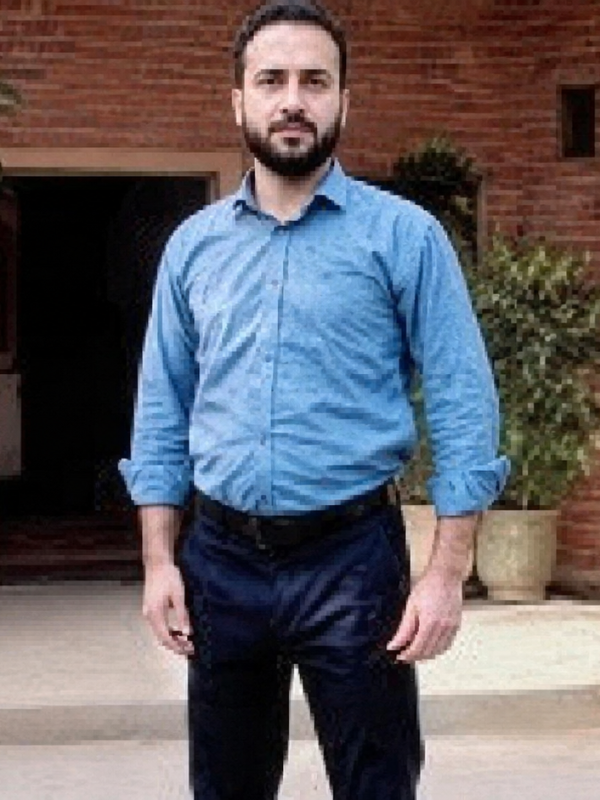
Mr. Haider Ali
Director and Consultant Psychologist
Mr. Haider Ali is the Director and Consultant Psychologist at Healing Door Rehab Center in Bani Gala, Islamabad. He is responsible for the clinical direction of the center’s treatment programming, the structure of its therapeutic services, and the day-to-day oversight of patient care across all stages of residential rehabilitation.
Professional Background
Mr. Haider Ali
Director and Consultant Psychologist
Mr. Ali holds a degree in Psychology with postgraduate studies in the same field. Before taking on the directorship at Healing Door, he built his clinical foundation in settings that most psychologists in Pakistan’s private rehab sector have never worked in.
His early career was spent at Lady Reading Hospital (LRH) in Peshawar, one of the largest and highest-volume public hospitals in Khyber Pakhtunkhwa. Working in that environment, where addiction cases often arrive alongside acute psychiatric emergencies, trauma, and severe comorbid conditions, gave him a practical understanding of substance use disorders that cannot be replicated in a private-practice setting. He learned to assess patients quickly, differentiate between substance-induced psychosis and primary psychiatric illness, and build treatment plans under resource constraints that demanded clinical precision.
From LRH, he moved into rehabilitation leadership. He served as the Director of Ehsas Rehab Center in Swat, where he developed and ran treatment programs in a region heavily affected by opioid and cannabis dependence. He then served as the Head of Psychology at Umaid Rehab Center in Peshawar, managing clinical staff, therapeutic programming, and patient outcomes across a residential patient population.
What He Does at Healing Door
At Healing Door, Mr. Ali’s role combines clinical leadership with direct patient work. He is not a figurehead director. He is involved in intake assessments, leads psychotherapy sessions, supervises junior therapists, and personally reviews treatment plans for complex cases, particularly patients with dual diagnosis presentations where addiction overlaps with conditions like depression, PTSD, or personality disorders.
His clinical focus areas include relapse prevention strategy, family dynamics in addiction, motivational interviewing for patients in pre-contemplation or ambivalence stages, and psychoeducation programming that helps families shift from a moralistic understanding of addiction to a neurobiological one. That shift, from “why won’t they just stop” to understanding how dopamine dysregulation and reward pathway damage actually work, is one of the most important predictors of whether a family will be able to support sustained recovery after discharge.
Mr. Ali also leads the center’s group therapy program, structuring sessions around themes that patients in Pakistani rehab settings consistently need to process: shame, family expectations, the stigma attached to seeking help, the social pressures that drive relapse in the first 90 days after discharge, and the practical challenge of rebuilding daily life without the substance that previously organized it.
Why This Background Matters for Your Family
Many private rehab centers in Islamabad are led by administrators or businesspeople rather than clinicians. When the person making treatment decisions has never sat across from a patient in active psychosis, or has never managed a group therapy session where half the participants are in their first week of withdrawal, the quality of clinical care suffers in ways that families do not always see until outcomes fall short.
Mr. Ali’s path, from a high-volume public hospital to regional rehab leadership to directing a UNODC-accredited center in Islamabad, means the person shaping your loved one’s treatment has seen the full range of what addiction looks like in Pakistan and knows what actually works.
To speak with Mr. Ali or to schedule an intake assessment, call 0314-9922547.