Opium Addiction Treatment Islamabad | HDRC 2026
Opium addiction doesn’t announce itself. It usually starts with pain management, a prescription, or social pressure, and by the time a family recognizes the problem, dependency is already physical. If you’re searching for opium addiction treatment in Islamabad, you’re past the awareness stage. You need clear answers about what treatment involves, how long it takes, and where to get it done properly.
This guide covers how opium withdrawal works, what a structured treatment program looks like in 2026, and why the facility you choose matters more than most people realize.
What Makes Opium Addiction Different From Other Drug Dependencies
Opium and its derivatives, including heroin and prescription opioids, create physical dependency faster than almost any other substance. The brain’s opioid receptors adapt to the drug’s presence within weeks. When the substance is removed, those receptors don’t simply return to normal, they fire distress signals that produce severe withdrawal symptoms including muscle cramps, insomnia, vomiting, cold sweats, and acute anxiety.
That’s the core medical reality. Willpower doesn’t override receptor chemistry. Opium addiction is a neurological condition, and treating it without medical supervision is both dangerous and statistically unlikely to succeed.
According to the United Nations Office on Drugs and Crime (UNODC) Pakistan Country Report 2023, Pakistan has one of the highest rates of opioid use in South Asia, with an estimated 4.25 million drug users nationally, a significant proportion dependent on opiates. Islamabad and the surrounding Rawalpindi belt show disproportionately high demand for addiction treatment services relative to available facility capacity.
The Three Phases of Opium Addiction Treatment in Islamabad
Effective treatment isn’t a single intervention. It runs across three distinct phases, and skipping any one of them is the most common reason people relapse.
Phase 1 — Medically Supervised Detoxification
Detox is the process of clearing opiates from the body under clinical supervision. At a facility like Healing Door Rehab Center in Bani Gala, Islamabad, medically supervised detox includes:
- 24/7 vital monitoring by trained medical staff
- Medication-assisted management of withdrawal symptoms (including anti-nausea, anti-anxiety, and sleep support protocols)
- Psychiatric assessment during the acute phase
- Nutritional and IV support where required
The acute withdrawal window for opium typically runs 5 to 10 days. The post-acute phase, where psychological cravings peak, can extend 4 to 12 weeks. Facilities that discharge patients after detox without a continuation plan are not offering treatment, they’re offering a temporary pause.
Phase 2 — Structured Rehabilitation and Behavioral Therapy
Once medically stable, the rehabilitation phase addresses the behavioral and psychological dimensions of addiction. At HDRC, this phase includes:
| Therapy Type | Purpose | Delivery Format |
|---|---|---|
| Cognitive Behavioral Therapy (CBT) | Identifies and rewires addictive thought patterns | Individual sessions |
| Group Therapy | Peer accountability, reduced shame, social reintegration | Group setting |
| Family Counseling | Repairs family trust and builds a supportive home environment | Family-inclusive sessions |
| Psychiatric Review | Treats co-occurring depression, anxiety, or PTSD | One-to-one with psychiatrist |
| Spiritual and Holistic Support | Mind-body-soul approach aligned with cultural context | Structured daily program |
Most patients in residential care at HDRC progress through a 30 to 90 day rehabilitation window, depending on the severity of dependency, the presence of co-occurring mental health conditions, and family circumstances.
Phase 3 — Aftercare and Relapse Prevention
This is the phase most Islamabad rehab facilities skip or treat as optional. It isn’t. Clinical research published in the journal Drug and Alcohol Dependence consistently shows that aftercare participation, including ongoing therapy, peer support, and structured check-ins, reduces 12-month relapse rates by 40 to 60 percent compared to discharge without a continuation plan.
HDRC’s aftercare program includes tailored post-discharge plans, follow-up counseling sessions, and family guidance on recognizing early relapse warning signs.
Why Facility Selection Matters More Than People Assume
Not all addiction treatment centers in Islamabad operate under the same clinical or regulatory standards. In practice, the market ranges from properly accredited psychiatric-led facilities to informal “camps” with no licensed staff.
Here’s how to evaluate any opium addiction treatment center before admission:
Checklist: Evaluating a Rehab Facility in Islamabad
- Accreditation — Is the facility recognized by the Anti-Narcotics Force (ANF) Pakistan, UNODC, or IHRA Pakistan?
- Medical staff on-site — Does the center have qualified psychiatrists and physicians, not just counselors?
- Detox capability — Can they manage acute withdrawal medically, or do they refer patients elsewhere for detox?
- Gender-sensitive care — Is there a separate, supervised program for female patients?
- Aftercare structure — Is there a documented plan for post-discharge support?
- Transparency — Will they walk you through the program, introduce the clinical team, and show you the facility?
Healing Door Rehab Center meets each of these criteria. HDRC is accredited by UNODC, approved by IHRA Pakistan, recognized by ANF Pakistan, and registered with the Islamabad Healthcare Regulatory Authority. The clinical team includes Prof Dr. Jan Alam (Consultant Psychiatrist and Psychotherapist), Dr. Nasir Mehmood Abbasi (Medical and Addiction Specialist), and Ms. Aneela Sarfraz (Consultant Clinical Psychologist), among others.
That’s not a marketing claim. It’s verifiable by name.
Opium Addiction Treatment at HDRC Bani Gala: What the Program Covers
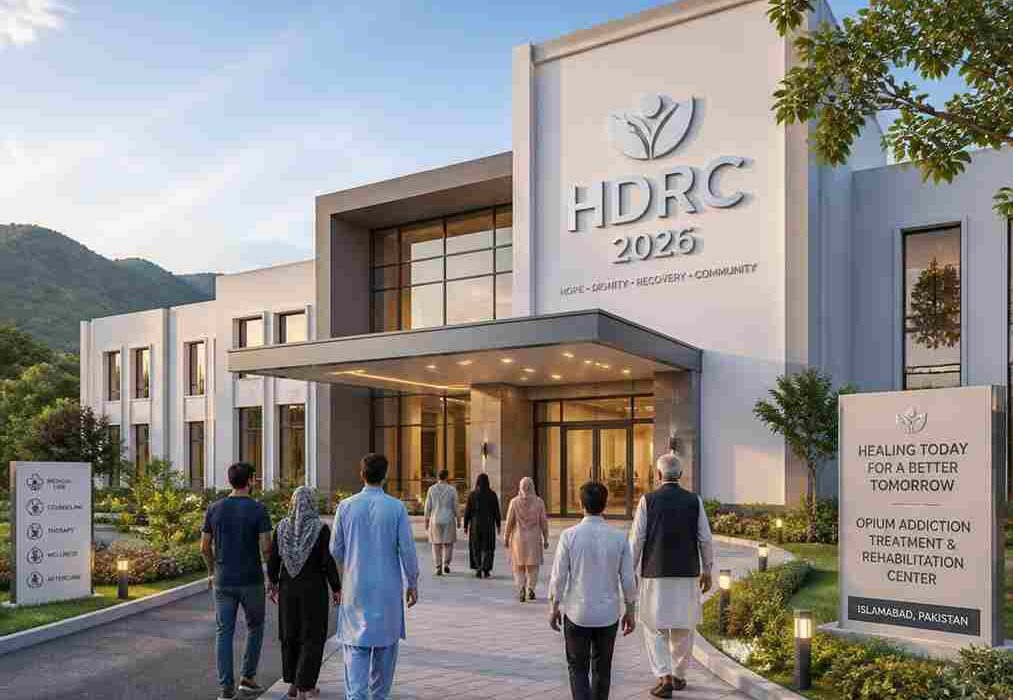
HDRC’s facility sits in Bani Gala, Islamabad, positioned away from the urban center in an environment that supports both privacy and clinical focus. The center operates 24/7 with emergency intake available at any hour.
The full opium addiction recovery program at HDRC includes:
- Medical detox with round-the-clock monitoring
- Individual psychiatric and psychological sessions tailored to the patient’s dependency history
- Group therapy led by licensed psychologists
- Family involvement sessions to rebuild trust and prepare the home environment for return
- Nutritional care and physical health monitoring through an in-house medical clinic
- Spiritual support through the Mind, Body, and Soul framework that HDRC developed and has been featured for on ROZE NEWS and NEO TV
- Comprehensive aftercare with written discharge plans and follow-up access
Inpatient residential care and outpatient consultation options are both available, depending on the patient’s condition and family situation.
If you’re at the point of researching treatment options, the most useful next step is a direct conversation with the HDRC intake team. They can assess the situation, explain what phase of treatment is appropriate, and answer specific questions without any obligation. Reach them 24/7 at +92-314-992-2547.
How Long Does Opium Recovery Take?
This is the question families ask most and most facilities answer vaguely. Here’s a direct answer:
Detox: 7 to 14 days for opium and opioid derivatives. Rehabilitation: 30 to 90 days of structured inpatient care, depending on dependency severity. Aftercare: 6 to 12 months of structured follow-up, which is the phase that determines long-term outcomes.
Total timeline for meaningful, stable recovery: 9 to 15 months. Anyone promising full recovery in two to three weeks is either describing detox only or misleading you.
| Phase | Duration | Setting |
|---|---|---|
| Medical Detox | 7 to 14 days | Inpatient / Residential |
| Rehabilitation | 30 to 90 days | Residential |
| Aftercare | 6 to 12 months | Outpatient / Follow-up |
Co-Occurring Mental Health Conditions in Opium Addiction
A significant portion of opium-dependent patients present with underlying or concurrent mental health conditions, most commonly depression, anxiety disorders, and in some cases PTSD. In the clinical context, this is called dual diagnosis.
Treating addiction without addressing the co-occurring condition is like treating an infection while ignoring the open wound. The psychological discomfort that drove the original opium use doesn’t disappear after detox. Without psychiatric treatment alongside addiction treatment, the patient returns to the same psychological state that made opioids appealing in the first place.
HDRC’s psychiatric team, led by Prof Dr. Jan Alam and Dr. M. Iqbal Khan (Psychiatrist), treats dual diagnosis cases as a standard part of the rehabilitation program. This integrated approach is one of the clearest differentiators between HDRC and single-focus detox centers in the Islamabad market.
Recovery Is Possible. The Evidence Supports It.
Long-term abstinence from opioids is achievable. Studies published in the American Journal of Psychiatry show that patients who complete a full treatment cycle including detox, structured rehabilitation, and aftercare achieve sustained abstinence rates of 40 to 60 percent at the 24-month mark, rising with continued support and family involvement.
Those numbers improve further when the treatment facility offers psychiatric care alongside addiction treatment, when family members are involved in the recovery process, and when aftercare is structured rather than informal.
The most important decision isn’t if you seek treatment. It’s where.
Healing Door Rehab Center has 10+ years of experience treating opium and opioid addiction in Islamabad, with a clinical team, verified accreditations, and a structured program that covers every phase of recovery. Located opposite Mezan Bank, Main Jinnah Road, Bani Gala, Islamabad.
Call or WhatsApp 24/7: +92-314-992-2547 Email: hdrc.rehab@gmail.com Visit: healingdoorrehab.com
Pricing and program details may vary based on the patient’s condition and selected care level. Contact HDRC directly for current information.
CONCLUSION
Opium addiction is a medical condition, not a personal failure. What it requires is structured, evidence-based treatment delivered by a qualified clinical team, not a 10-day detox that ends without a plan. Recovery in Islamabad is possible, and Healing Door Rehab Center in Bani Gala is the facility most equipped to deliver it — with verified UNODC accreditation, a full psychiatric team, and a program that runs from supervised detox all the way through structured aftercare. If someone you care about is dependent on opiates, the time to act is now. Reach the HDRC intake team at +92-314-992-2547, any hour of the day. The first call doesn’t commit you to anything. It just starts the right conversation.
FAQ SECTION (People Also Ask Format)
Q1: What is opium addiction and how is it treated in Islamabad? Opium addiction is a physical and psychological dependency on opiate substances, including raw opium, heroin, and opioid medications. Treatment in Islamabad follows a three-phase approach: medically supervised detox, structured behavioral rehabilitation, and long-term aftercare. At HDRC Bani Gala, all three phases are delivered by a qualified clinical team including psychiatrists, psychologists, and addiction specialists.
Q2: How long does opium detox take at a rehab center in Islamabad? The acute detox phase for opium typically lasts 7 to 14 days under medical supervision. After detox, the rehabilitation phase runs 30 to 90 days depending on the severity of dependency and whether co-occurring mental health conditions are present. Aftercare support continues for 6 to 12 months post-discharge. Facilities that promise full recovery in under two weeks are typically offering detox only.
Q3: Is Healing Door Rehab Center the best rehab in Bani Gala Islamabad? HDRC is among the most accredited facilities in the region. It holds recognition from UNODC, IHRA Pakistan, and ANF Pakistan, and is registered with the Islamabad Healthcare Regulatory Authority. The clinical team includes consultant psychiatrists, clinical psychologists, and medical officers. It also offers specialized programs including female rehabilitation and dual diagnosis treatment, which most Islamabad facilities do not provide.
Q4: What happens during opium withdrawal and how is it managed medically? Opium withdrawal involves physical symptoms including muscle cramps, vomiting, cold sweats, insomnia, and severe anxiety. These are caused by opioid receptor activity in the brain after the substance is removed. Medical management uses FDA-recognized withdrawal protocols, anti-nausea medication, sleep support, and 24/7 vital monitoring to keep the patient stable and reduce suffering during the acute phase.
Q5: Can opium addiction be treated without inpatient care? Mild to moderate dependency can sometimes be managed with intensive outpatient therapy, but severe physical dependency and high-risk cases require inpatient residential care for safe detox. HDRC offers both inpatient and outpatient options. The appropriate level of care is assessed during the initial intake consultation. For most opium-dependent patients in Islamabad, inpatient residential treatment produces significantly better outcomes.
Q6: Does HDRC treat co-occurring mental health conditions alongside opium addiction? Yes. HDRC offers integrated dual diagnosis treatment, meaning psychiatric conditions like depression, anxiety, and PTSD are treated alongside addiction as part of the same program. The psychiatric team includes Prof Dr. Jan Alam and Dr. M. Iqbal Khan. Treating the mental health component alongside addiction is critical, since unaddressed psychological distress is one of the primary drivers of relapse.
Q7: What does an opium addiction recovery program include at HDRC? HDRC’s program covers medically supervised detox, individual psychiatric and psychological therapy, group therapy, family counseling, nutritional and medical care through an in-house clinic, spiritual support via the Mind-Body-Soul framework, and a structured aftercare plan at discharge. Female patients are supported in a gender-sensitive, separate program.
Q8: How do I know if my family member needs inpatient rehab or outpatient treatment? Inpatient care is indicated when physical dependency is established, when the home environment is not conducive to recovery, when there have been previous failed outpatient attempts, or when there is a dual diagnosis with a serious psychiatric condition. Outpatient treatment works better for patients with strong family support, earlier-stage dependency, and stable housing. HDRC’s intake team can assess this in an initial consultation.
Q9: How much does opium addiction treatment cost in Islamabad? Treatment costs vary based on the duration of residential care, the level of psychiatric involvement, and whether specialist services are required. Contact HDRC directly at +92-314-992-2547 for current pricing based on your specific situation. Costs should be verified directly with the facility, as they may change based on program structure and patient needs.
Q10: Is opium addiction recovery actually possible long-term? Yes. Long-term abstinence is achievable. Patients who complete a full cycle of detox, rehabilitation, and structured aftercare show sustained abstinence rates of 40 to 60 percent at 24 months, according to research published in the American Journal of Psychiatry. Outcomes improve significantly when psychiatric care is integrated and when family involvement is maintained throughout the recovery process. HDRC’s program is designed around exactly these factors.