Detox Program in Islamabad: Day 1 to Day 30 (2026 Guide)
It’s 2 a.m. Your brother hasn’t slept in three days, he’s pacing the house, and he says he’ll quit ice “from tomorrow.” You’ve heard that before. What you need now isn’t another promise. You need to know what a detox program in Islamabad actually involves, how long it takes, whether it’s safe, and what happens after the last withdrawal symptom fades.
Most families call a rehab knowing only one word: detox. They don’t know that heroin, alcohol and ice withdrawal look completely different, or that detox alone is the shortest and least important part of recovery. By the end of this guide you’ll know what each week looks like, which drug needs the most medical care, what it costs, and how admission works at Healing Door Rehab Center in Bani Gala.
What is a detox program, and what does it not do?
A detox program is a medically supervised period in which a drug or alcohol leaves the body while doctors manage withdrawal symptoms and keep the patient safe. It treats the body’s dependence. It doesn’t treat the addiction itself.
That difference matters more than anything else in this article. The World Health Organization and the U.S. National Institute on Drug Abuse (NIDA, Principles of Drug Addiction Treatment) both state that detoxification is only the first stage of treatment and, on its own, rarely changes long-term drug use. A patient who leaves after seven days of detox usually feels better physically, and that’s exactly when the cravings and the old friends come back.
So when a center offers a “7-day detox” as a complete solution, ask what happens on day 8.
Detox vs rehab vs recovery treatment
Families often use these three words as if they mean the same thing. They don’t.
| Term | What it means | Typical length | Who leads it |
| Detox (detoxification) | Removing the substance safely and managing withdrawal | 5–14 days | Physician / addiction medicine specialist |
| Rehabilitation (rehab) | Therapy that treats why the person uses: CBT, group, family sessions | 3–10 weeks after detox | Clinical psychologist + psychiatrist |
| Recovery treatment / aftercare | Relapse prevention after discharge: follow-ups, outpatient sessions, family plan | 6–12 months | Therapist + family |
Why a detox program in Islamabad is safer than quitting at home
Supervised detox is safer because some withdrawals can turn dangerous within 24 to 72 hours, and a family at home can’t see the warning signs early. Alcohol and sedative-pill withdrawal carry the highest risk.
Alcohol withdrawal can cause seizures and delirium tremens, a medical emergency described in the American Society of Addiction Medicine (ASAM) Clinical Practice Guideline on Alcohol Withdrawal Management (2020). Benzodiazepines like Xanax, and pregabalin, should never be stopped suddenly after long use; they’re tapered under a doctor. Heroin withdrawal is rarely fatal, but it’s so painful that most people relapse within days if they try it alone.
Ice (crystal meth) is different again. The body doesn’t shake as much, but the mind does: deep depression, paranoia, extreme sleep and, in some people, suicidal thoughts. That’s why ice detox needs a psychiatrist on the team, not just a general physician.
There’s also a Pakistan-specific reason. Many families try “home detox” with sleeping pills bought over the counter. That often swaps one dependence for another, or masks a withdrawal seizure until it’s too late.
What happens in a detox program, day by day?
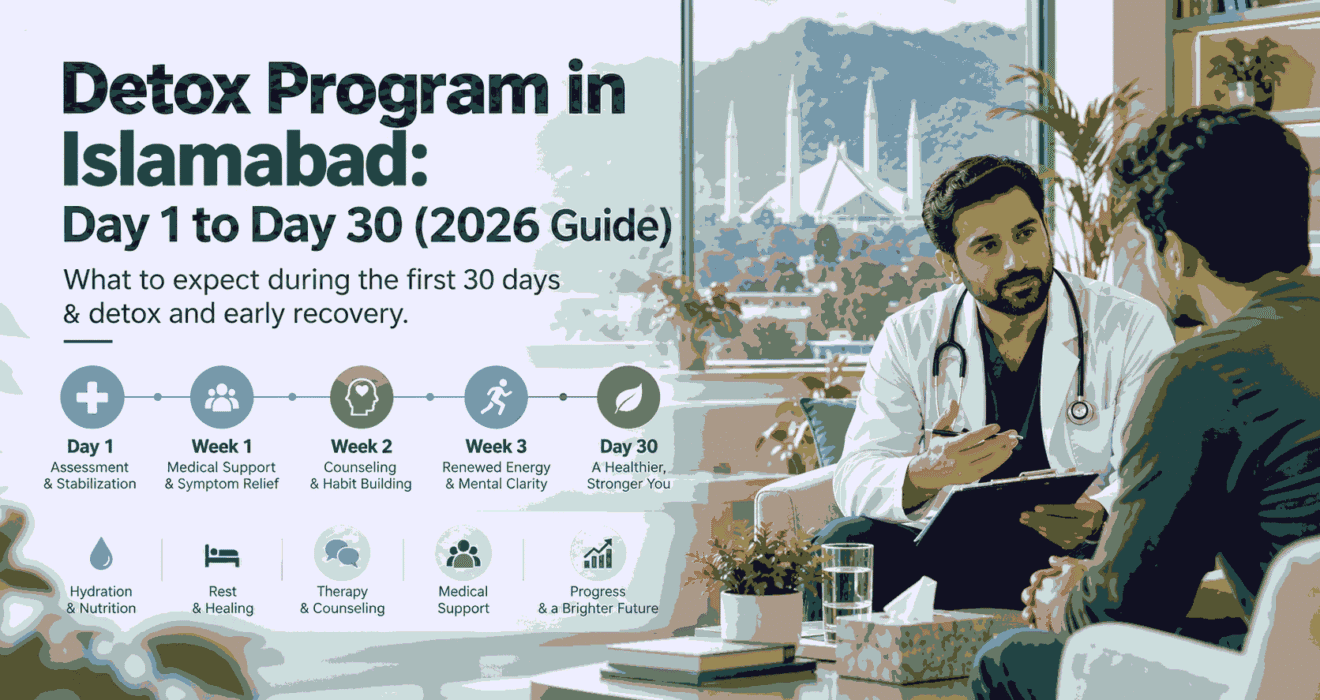
A typical inpatient detox moves through four phases: assessment, acute withdrawal, stabilisation and the move into therapy. The exact timeline depends on the drug, the amount used, and the person’s health.
Day 1: Assessment and a safe start
The first day is about information, not medication. At Healing Door, the admitting doctor takes a full history (which drugs, how much, how long, last use), checks blood pressure, pulse and weight, and orders basic tests such as a urine drug screen, liver and kidney function, and a blood count.
A psychiatrist also screens for depression, psychosis or suicidal thinking, because roughly half of people with addiction have a co-occurring mental illness (dual diagnosis). Families sign consent, hand over a medication list and agree on visiting and phone rules. The patient gets a bed, a routine, and someone checking on them through the night.
Days 2–7: Acute withdrawal
This is the hardest week, and it’s where medical supervision earns its place. Symptoms usually peak between day 2 and day 4.
The medical team gives symptom-based medicines (for pain, sleep, nausea, anxiety or blood pressure) and, where clinically appropriate, longer-acting medicines that ease withdrawal gradually. Nurses check vitals several times a day. Hydration, food and sleep are treated as seriously as medicine. No one should be choosing medicines or doses for themselves at this stage, which is why we don’t list them here.
Days 8–14: Stabilisation
By the second week most physical symptoms settle. Sleep and appetite return, and the patient starts thinking clearly enough to talk.
This is when therapy begins: short individual sessions with a clinical psychologist, the first group sessions and a family meeting. Cravings are still strong, and some patients now insist they’re “cured” and ask to go home. That moment is predictable. Families who know it’s coming handle it far better.
Days 15–30: From detox into rehabilitation
The last two weeks shift from the body to behaviour. Patients start Cognitive Behavioural Therapy (CBT), learn their personal triggers, build a daily routine (exercise, prayer if they choose, meals, sleep) and write a written relapse prevention plan with the family.
By day 30, a doctor and psychologist review progress and recommend one of three paths: discharge with outpatient follow-up, an extended 60–90 day stay, or psychiatric treatment for an underlying condition.
How long does detox take for ice, heroin, alcohol and pills?
The length of detox depends on the substance. Alcohol and heroin detox are usually shortest, and ice and sedative pills take longer because of mood symptoms or tapering.
| Substance | Withdrawal starts | Peak | Physical detox lasts | Main medical risk | Healing Door service page |
| Alcohol | 6–24 hours | 24–72 hours | 5–7 days | Seizures, delirium tremens | Alcohol treatment |
| Heroin / opioids | 8–24 hours | 2–4 days | 7–10 days | Severe pain, dehydration, early relapse | Heroin treatment |
| Ice (crystal meth) | 1–2 days | 3–7 days | 7–14 days (mood longer) | Depression, paranoia, suicidal thoughts | ICE rehab |
| Cannabis (charas, weed) | 1–3 days | 2–6 days | 1–2 weeks | Irritability, insomnia, anxiety | Drug addiction treatment |
| Xanax, tramadol, pregabalin | 1–3 days | varies | 2–6 weeks (tapered) | Seizures if stopped suddenly | Detox services |
Timelines are typical ranges drawn from WHO and NIDA clinical guidance; your doctor will set the actual plan after assessment. If you’re not sure which row your family member fits, save this table and share it with the admitting doctor on the first call.
30, 60 or 90 days: which detox and rehab program is right?
A 30-day program fits most first-time patients with a single drug and good family support. Longer programs suit relapse, multiple drugs or a mental illness.
NIDA’s research summary says that most people need at least three months of treatment to significantly reduce or stop drug use, and that better outcomes come with longer treatment. That doesn’t mean everyone needs 90 days inside a facility. It means the full plan, inpatient plus outpatient, should cover about three months.
| Program | Best for | What’s included | When it isn’t enough |
| 30 days | First admission, one substance, stable mental health, supportive family | Medical detox, CBT, group therapy, family sessions, discharge plan | Previous relapses, ice or poly-drug use, psychosis |
| 60 days | Second admission, ice or heroin with heavy use, weak home support | All of the above plus deeper therapy, life-skills work, longer craving phase | Severe dual diagnosis |
| 90 days | Repeated relapse, schizophrenia or bipolar disorder with addiction, long-term heavy use | Detox, psychiatric treatment, intensive therapy, gradual home visits before discharge | Rarely; then a structured aftercare plan matters most |
When the 30-day program fails
The 30-day plan is the most popular option in Pakistan, and it fails most often in three groups.
- Ice users with paranoia or hallucinations. The mood crash can last weeks. Discharging at day 30 often lands the patient back home at their lowest point.
- People going back to the same friends and the same mohalla. Without a changed environment and a family plan, the trigger is waiting at the gate.
- Patients with hidden depression or bipolar disorder. If the illness isn’t treated, the drug was the medicine they chose. They’ll choose it again.
For these patients, the better choice is a 60–90 day stay or a 30-day stay followed by weekly outpatient sessions with a psychiatrist.
How much does a detox program cost in Pakistan?
Detox costs in Islamabad depend on the length of stay, the room type, medical tests, medicines and how much psychiatric care is needed. Fixed “package prices” quoted on the phone without an assessment are usually misleading.
Here’s what actually changes the bill:
- Medical intensity: alcohol or pill withdrawal needs closer monitoring than cannabis.
- Room type: shared ward vs private room or premium private rehab.
- Tests and medicines: blood work, ECG and psychiatric medication add cost.
- Length: a 90-day plan costs more upfront but is usually cheaper than three failed 30-day admissions.
- Hidden costs families forget: patient pickup or transfer, lost work days, and a relapse that restarts everything.
“Free” rehab centers do exist through some government and charitable programs, but waiting lists, limited medical cover and short stays are common. Ask any center, including us, for a written estimate before admission. You can see the main cost factors on our rehab cost in Pakistan page. Fees change, so confirm current rates directly with the admissions team.
What makes a safe detox center in Islamabad?
A safe detox center has a doctor available 24/7, a psychiatrist on the team, a valid regulatory licence and a written treatment plan. Everything else is secondary.
Use this checklist on the phone or during a visit:
- Is the center registered with the Islamabad Healthcare Regulatory Authority (IHRA)? Ask for the registration, not just a logo.
- Who supervises withdrawal at night? “A guard” or “staff” isn’t an answer. You want a named doctor or trained nurse.
- Is there a consultant psychiatrist, and how often do they see patients?
- What happens in a medical emergency? Ask which hospital they transfer to and how fast.
- Do they use force, chains or punishment? Any yes is a reason to leave. Ethical treatment never involves restraint as punishment.
- Is there a separate arrangement for women? See our female rehabilitation services.
- What’s the aftercare plan after discharge?
- Will they give a written cost estimate?
We’ve put more of these on our list of 20 questions to ask a rehab center, and you should ask them to us as well.
Pros and cons of inpatient detox
Pros: 24/7 medical safety, no access to the drug, structured routine, immediate psychiatric support, and family gets a break to recover too.
Cons: time away from work or studies, higher cost than outpatient care, and some patients resist admission. Outpatient detox can work for mild cannabis or early-stage use with strong family supervision. It isn’t suitable for alcohol, sedative pills, heavy heroin or ice with psychosis.
How does admission to Healing Door’s detox program work?
Admission takes four steps and can usually start the same day. Most families begin with a confidential phone or WhatsApp call.
- Call or WhatsApp +92 314 992 2547 (24/7). Share the substance, how long it’s been used and any mental health symptoms. Nothing is shared without consent.
- Free confidential assessment. A clinician advises whether inpatient detox is needed and which program length fits.
- Written estimate and consent. You get the cost, the plan and the visiting rules before anything is signed.
- Admission at our Bani Gala center. If the patient refuses or is unsafe to travel, ask about supervised patient transfer from Islamabad, Rawalpindi or other cities.
Families living in the UK, UAE or Saudi Arabia can handle the whole process remotely. See rehab for overseas Pakistanis.
Who leads detox at Healing Door?
Since 2014, Healing Door Rehab Center in Bani Gala has treated addiction and psychiatric illness under one roof. The team includes Dr. Nasir Mehmood Abbasi (Medical and Addiction Specialist), consultant psychiatrist Dr. M. Iqbal Khan, Prof. Dr. Jan Alam (MBBS, FCPS Psychiatry) and clinical psychologists who run CBT and family therapy. The center is approved by IHRA, works with the Anti Narcotics Force (ANF) and has a separate arrangement for women. See the full expert team.
What is the situation of drug use in Pakistan in 2026?
Pakistan still relies on data that’s more than a decade old, which is part of the problem. The UNODC Drug Use in Pakistan survey (2013) estimated about 6.7 million people had used drugs in the past year, and around 4.25 million were drug dependent. Treatment capacity has never come close to that number.
Globally, the UNODC World Drug Report 2025 estimated that about 316 million people used drugs in 2023, and warned that synthetic stimulants such as methamphetamine are spreading fast in Asia. That matches what Islamabad families report: ice use has moved from parties into colleges and homes. In 2026 the question for most families isn’t whether help exists. It’s which kind of help fits their situation.
Conclusion
A detox program in Islamabad is the safe, medically supervised first step, not the whole treatment. Alcohol and sedative pills need the closest medical care. Ice needs psychiatric support. Heroin needs strong relapse protection after the pain fades. For most patients, 30 days is the minimum and 60 to 90 days is safer when there’s relapse history or a mental illness.
If someone in your family is in withdrawal right now, or refusing help, start with a free confidential assessment. Call or WhatsApp Healing Door on +92 314 992 2547, or use our contact page to speak to our admissions team. Our detail page on detoxification services in Islamabad explains the medical side further.
Detox gets the drug out of the body. The next ninety days decide whether it stays out.
FAQ SECTION
1. How long is a detox program in Islamabad?
Most detox programs in Islamabad take 7 to 14 days for physical withdrawal, inside a 30, 60 or 90 day rehab plan. Alcohol and heroin detox are usually shorter. Ice and sedative pills like Xanax or pregabalin take longer, because mood symptoms last or the medicine has to be reduced slowly.
2. Is a 30 days detox program enough?
A 30-day program is enough for many first-time patients who use one substance and have strong family support. It’s usually not enough after previous relapses, heavy ice use, or with depression, bipolar disorder or schizophrenia. In those cases a 60 to 90 day plan or outpatient follow-up works better.
3. What is the difference between detox and rehab?
Detox removes the drug from the body and manages withdrawal safely. Rehab treats the reasons a person uses drugs, through therapy such as CBT, group sessions and family work. Detox without rehab usually leads to relapse, so the two should be planned together.
4. Can someone detox at home in Pakistan?
Home detox is unsafe for alcohol, sleeping pills, Xanax, pregabalin and heavy heroin use, because withdrawal can cause seizures or severe complications. Mild cannabis withdrawal can sometimes be managed at home under a doctor’s guidance. Never use over-the-counter sleeping pills to manage withdrawal yourself.
5. Is detox painful?
Detox is uncomfortable, but medical supervision makes it far more manageable. Doctors treat pain, nausea, anxiety and sleep problems as they appear. Heroin withdrawal is usually the most physically painful, while ice withdrawal is harder on mood and energy.
6. How much does detox cost in Islamabad?
Detox cost in Islamabad depends on the length of stay, room type, medical tests, medicines and psychiatric care needed. A reliable center gives a written estimate after assessment instead of a fixed phone quote. Prices change, so confirm current fees directly with the center’s admissions team.
7. What medicines are used in drug detox?
Doctors use medicines that ease specific withdrawal symptoms, and sometimes longer-acting medicines that reduce withdrawal gradually. The choice depends on the substance, the person’s health and their test results. These medicines must only be prescribed and monitored by a doctor, because self-medication during withdrawal is dangerous.
8. Can a patient be admitted without their consent?
Ethical centers aim for informed consent, and most reluctant patients agree after a calm, structured family conversation. Where a person is a danger to themselves or others, families should talk to the psychiatrist about the legal and medical options. Force, chains or punishment are never acceptable treatment.
9. Is there a female detox program in Islamabad?
Yes. Healing Door offers separate arrangements for women, with female staff involved in daily care and full confidentiality. Families can discuss privacy, visiting rules and the female clinical team before admission.
10. What happens after detox ends?
After detox, the patient moves into therapy, builds a relapse prevention plan and is discharged with a follow-up schedule. Outpatient sessions, family meetings and quick access to a psychiatrist in the first six months make the biggest difference to staying clean.