Best Rehab Center in Islamabad | Healing Door Rehab Center
Choosing the best rehabilitation center in Islamabad is an essential step for a person dealing with drug abuse, alcohol dependence, mental problems, or recurrent relapse.
A proper rehabilitation center will provide assessment, treatment, safety, and continuous assistance to the patient during his/her recovery period.
The process of recovery involves many things and it is not only about quitting using a certain drug. Medical treatment, psychological counseling, behavior modification, family treatment, relapse prevention and aftercare are some elements that can help one to recover properly from an addictive illness.
Every person’s case is unique and, therefore, the treatment program should depend on the person’s condition, background and recovery needs.
Healing Door Rehab Center offers addiction rehabilitation and psychiatry services in Islamabad. According to the center’s website, it has more than 10 years of rehabilitation experience and works 24/7.
What Should You Look for in the Best Rehab Center in Islamabad?
When choosing a rehabilitation center, individuals must look past marketing efforts. The proper center will offer trained staff members, the right treatment program, medical monitoring when necessary, psychological care, and a recovery program.
In addition, one must be aware of what kind of treatment is needed. Individuals who are suffering from extreme substance dependency might first have to undergo medically assisted detoxification before receiving intensive therapy. Individuals who are suffering from addiction along with other mental disorders such as depression, anxiety, or some other form of trauma need a more comprehensive treatment program.
A good place to begin is by researching the rehabilitation facilities and their programs.
Drug Addiction Treatment in Islamabad
Drug addiction can have its impact on physical, emotional, familial, educational, vocational, and social aspects. Professional rehabilitation can help in structuring things for an individual and in giving him the understanding of what the causes of his substance use could be.
Healing Door is a rehabilitation center in Islamabad that provides treatment for drug addiction with personal recovery programs. Healing Door refers to the application of various approaches such as CBT, group therapy, and individualized treatment.
Treatment is not something that can be generalized. Various factors such as substance type, length of usage, past treatment, physical and psychological condition, and family issues can all determine the treatment.
Medically Supervised Detoxification
Detoxification may be a necessary initial step for those who have formed a physical addiction to particular substances. The process of detoxification may entail severe physical or psychological symptoms, and that is why a professional evaluation is required.
“Healing Door” offers detoxification facilities in Islamabad and describes its process of detoxification as medically monitored and assists with withdrawal symptoms.
Yet, detoxification alone does not equal full rehabilitation. After detoxification, patients may require therapy, behavioral help, psychiatry, involvement of their families, etc.
Alcohol Addiction Rehabilitation
An alcohol dependency may influence a person’s physical well-being, emotional well-being, relationships, and daily obligations. Treatment through a professional may assist a person to recognize his/her dependency and learn ways of staying sober.
There is a facility known as Healing Door that offers alcohol abuse treatments in Islamabad. The facility’s official web page talks about their provision of personalized therapy, counseling, and relapse prevention assistance among other services.
Since withdrawal from alcohol may be physically dangerous at times, a person with an alcohol dependency problem needs professional assessment instead of going through sudden withdrawal.
ICE and Crystal Meth Rehabilitation
ICE is a strong stimulant that could result in behavioral, sleeping, mood, and physiological alterations in the patient. Treatment might require the implementation of certain techniques and programs for the patient.
The Healing Door provides ICE rehabilitation in Islamabad . The Healing Door describes its program as a process of detoxification, behavioral therapy, and assistance.
Families should consider getting professional help when it is hard for the family member to control their substance use, or the patient undergoes drastic changes in behavior, sleeping habits, etc.
Mental Health and Psychiatric Support
It is possible to experience both addiction and mental illnesses simultaneously. Depression, anxiety, disorders linked to trauma, psychosis, or other mental illnesses need evaluation along with an intervention for addiction.
Healing Door offers mental and psychiatric care services in Islamabad. The list of the organization’s mental and psychiatric care services includes treatment for anxiety, depression, schizophrenia, PTSD, and other psychological disorders.
If a person suffers from addiction and a mental illness at once, a therapy that would only focus on one problem may miss crucial aspects of treatment.
Female Rehabilitation Services
Women might require privacy, security, family, and treatment needs that are distinct. It becomes easier for families to get professional help through a rehabilitation program tailored to give an appropriate environment.
Healing Door provides rehabilitation services for women in Islamabad . According to the website, Healing Door provides a rehabilitation service for women only in a private and secure environment.
The family must be informed regarding the needs of their patient before admitting him/her into the program.
Why Personalized Treatment Matters
Each individual will have his own treatment strategy because there is no one recovery program that will fit everyone.
According to Healing Door, its specialists design personalized recovery programs and offer continuous aftercare assistance.
Such an approach can include:
Type of drug or disorder
- Severity and duration of the issue
- Previous treatments
- General health conditions
- Psychological state
- Family situation
- Possibility of relapsing
- Inpatient or outpatient treatment
- Goals for recovery in the long term
This kind of evaluation can assist families in understanding which treatment is proper, instead of choosing facilities by their geographical proximity or marketing strategies.
Importance of Professional Staff
Rehabilitation center must have well-trained professionals that will be able to help in dealing with addiction and also mental disorders where required.
The experts in the Healing Door have been stated as psychiatrists, psychologists, addiction specialists, medical and addiction specialist, and clinical psychologist.
Families may look into the expert team at Healing Door before making contact with the center. The process of asking about the expertise of the professionals in treatment process is very important.
Inpatient and Outpatient Rehabilitation
Treatment in the right environment will depend on the specific case of the individual concerned.
Inpatient and residential treatment makes it possible for an individual to receive help within the treatment facility. This makes it possible for an individual to get away from any surroundings that may remind him or her of the substance of addiction.
Outpatient treatment will enable the patients to receive treatment in their homes while being under the supervision of the professionals.
According to Healing Door, it is able to offer residential and outpatient treatment depending on the suitability of the patient.
Family Support and Aftercare
However, recovery does not automatically conclude with a stay in a residential facility. Coming back to one’s ordinary environment presents situations where recovery could be jeopardized.
Thus, family involvement can be a vital element of rehabilitation. Family members can be educated to communicate in the right way, spot warning signs, set up appropriate boundaries, and support recovery without encouraging negative behavior.
The Healing Door also offers family therapy and support, relapse prevention, and aftercare among other recovery services.
Having an aftercare plan in writing can help people recognize the support they will receive after being discharged from a rehab center and what they should do in case of any problems.
Healing Door Rehab Center in Islamabad
Healing Door Rehab Center operates out of the area of Bani Gala in Islamabad and specializes in addiction rehabilitation, psychiatry, mental care, detoxification, and other related treatments.
For families that need treatment options for their loved ones, they can visit the website of Healing Door Rehab Center to know about its services and also make contact with the facility.
Moreover, the facility gives information about its facilities via rehab gallery at the website of Healing Door Rehab Center.
How to Choose the Right Rehab Center
Before settling for any rehabilitation center, families should consider asking:
- What kind of addiction or disorder is being addressed at the center?
- Are there medical or psychological professionals who are well versed in dealing with addictions?
- Is there medically supervised detoxification when needed?
- Does the center offer both addiction recovery and psychological services?
- Are there options of family therapy at the center?
- What comes after the residential treatment?
- Does the center have outpatient treatment?
- How is the treatment plan for the patients established?
- How will they be helped during emergencies?
- How can the family reach out to the staff of the center?
FAQs
1. What is the best rehab center in Islamabad?
The choice of a proper rehabilitation center depends on the addiction and psychological state of the person in need, his/her medical requirements and previous experience of treatments and the family situation of that person.
2. What forms of treatment does Healing Door offer?
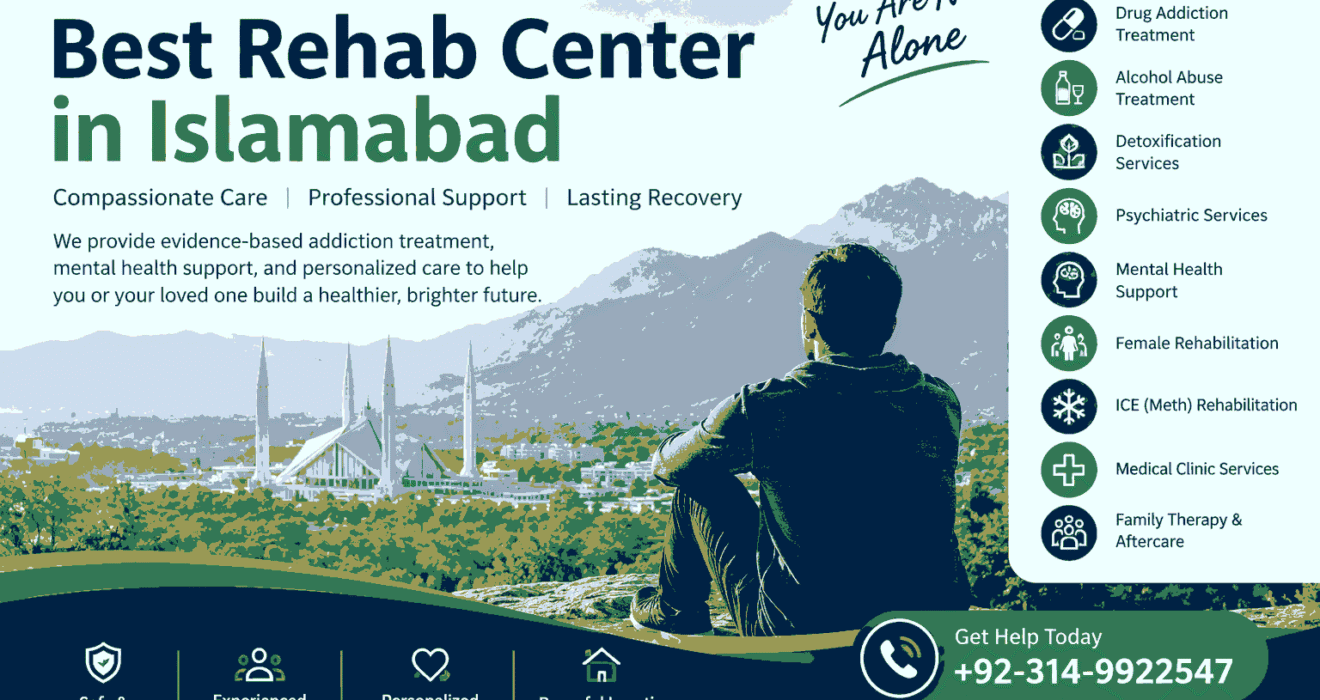
Healing Door lists drug addiction treatment, detoxification, alcohol abuse treatment, psychiatric services, ICE rehabilitation, female rehabilitation, medical clinic services, and mental health care among its programs.
3. Does rehab include detoxification?
Detoxification may be included when clinically appropriate. Healing Door provides medically supervised detoxification services and states that its program includes support for withdrawal symptoms. The appropriate treatment should be determined through professional assessment.
4. Is ICE addiction a treatment concern at Healing Door?
Yes. At Healing Door there is an ICE rehabilitation program that addresses crystal methamphetamine addiction problems. The information on the website highlights the steps involved.
5. Does Healing Door provide psychiatric treatment?
Yes, Healing Door provides psychiatric treatments for different kinds of mental illnesses like anxiety disorder, depression, schizophrenia, PTSD, etc.
6. Is there any involvement of the family members in the process of rehabilitation?
Involvement of the family members could be significant in the process of recovery. In this regard, the organization Healing Door states about the inclusion of family therapy and support, and also that the families are actively involved in the recovery process.
7. How can one contact the rehab center in Islamabad?
For contacting the rehab center in Islamabad, one must contact Healing Door Rehab directly through their contact page. The center operates round-the-clock and is situated in Bani Gala, Islamabad.
The First Step in Achieving Recovery
If there is any problem of addiction or any other mental health disorder that is bothering either you or someone from your family, then it’s better to seek professional advice at the very outset, as it will allow you to know the options of treatments that are available to you.
Get in touch with Healing Door Rehab Center in order to learn whether its treatment facilities are right for you.
Get in touch with Healing Door Rehab now to know about addiction treatment, detoxification, and psychiatric services in Islamabad.