Best Ice Addiction Treatment Center in Islamabad 2026
Ice addiction is not a willpower problem. It’s a neurological crisis that most families in Pakistan don’t recognize until someone stops sleeping, stops eating, or stops making sense. By then, the window for easy intervention has already closed. If you’re searching for the best ice addiction treatment center in Islamabad right now, you probably already know the situation is serious. This guide explains what effective treatment for crystal meth actually involves, what separates centers that produce real recovery from those that don’t, and why Healing Door Rehab Center (HDRC) in Bani Gala has built a track record with ice-dependent patients when other facilities have struggled.
What Is Ice and Why Is It Different From Other Drug Addictions?
Ice is crystal methamphetamine — a synthetic stimulant that floods the brain’s dopamine system at a level no natural experience can match. A single session of heavy use can structurally alter how the brain produces and responds to dopamine, sometimes for months. That’s why ice addiction is significantly harder to treat than opioid or alcohol dependence: there is no pharmaceutical substitute to ease withdrawal, and the psychological crash after stopping is severe enough to trigger suicidal ideation, psychosis, and extreme aggression.
In Pakistan, ice use has risen sharply in urban centers since 2021. A 2023 UNODC report on drug use trends in South Asia flagged methamphetamine as the fastest-growing substance of concern in Pakistan’s major cities, including Islamabad and Rawalpindi. Families searching for help are often doing so in a state of genuine emergency.
The three features that make ice addiction uniquely difficult:
- Stimulant psychosis — ice users can develop symptoms identical to paranoid schizophrenia, even without any prior mental health history
- Prolonged withdrawal — the “crash” phase can last 2 to 4 weeks, with extreme fatigue, depression, and craving
- High relapse risk — without structured aftercare and behavioral therapy, relapse rates within the first 90 days are very high
Understanding this matters when choosing a treatment center. Most general rehab facilities in Pakistan are designed around opioid protocols. Ice requires a different clinical setup entirely.
How Ice Addiction Treatment Actually Works
Effective treatment for ice drug addiction is not a single program. It’s a sequenced clinical process, and the quality of each stage determines long-term outcomes.
Stage 1: Medical Detox and Stabilization
The first phase focuses on stabilizing the patient medically. Ice withdrawal does not produce the physical danger of heroin or alcohol withdrawal, but the psychiatric symptoms — paranoia, hallucinations, severe depression, sleep collapse — require direct clinical management. At HDRC, this phase is supervised 24/7 by medical officers and psychiatrists, not just nursing staff.
Stimulant psychosis is the symptom most families are not prepared for. A patient in ice psychosis can appear to have a permanent mental illness. With the right psychiatric intervention, most psychotic symptoms resolve within 2 to 6 weeks of abstinence. Without it, families pull patients out too early thinking recovery isn’t possible.
Stage 2: Psychiatric Assessment and Dual Diagnosis
This is where most treatment centers in Pakistan fall short. Ice addiction almost always coexists with an underlying issue: untreated anxiety, depression, trauma, or ADHD. Treating the addiction without addressing what drove someone to ice in the first place produces short-term sobriety and long-term relapse.
HDRC conducts full psychiatric evaluations during the early residential phase. Prof. Dr. Jan Alam and Dr. M. Iqbal Khan, both consultant psychiatrists on the HDRC team, manage dual diagnosis cases where mental illness and substance dependence are running simultaneously. This matters enormously. You can’t counsel someone out of paranoid psychosis. You need clinical psychiatric care alongside the addiction treatment.
Stage 3: Behavioral Therapy
Once the patient is medically stable and psychiatric symptoms are managed, the behavioral work begins. For ice addiction specifically, Cognitive Behavioral Therapy (CBT) and Dialectical Behavior Therapy (DBT) are the evidence-based approaches that produce measurable change. CBT helps patients identify the triggers and thought patterns that drove use. DBT builds distress tolerance so patients can manage cravings without relapse.
At HDRC, both individual therapy and group therapy sessions run as part of the residential program under Dr. Asad Ali Noor (Consultant Psychologist and CEO) and Ms. Aneela Sarfraz (Consultant Clinical Psychologist).
Stage 4: Relapse Prevention and Aftercare
Recovery doesn’t end at discharge. For ice addiction in particular, the first 90 days post-discharge are statistically the highest relapse risk period. HDRC builds individualized aftercare plans before every discharge: triggers mapped, coping mechanisms rehearsed, family education delivered, and the clinical team available post-discharge.
Can Ice Addicts Recover? What the Evidence Says
Yes. Ice addiction is treatable, and full, sustained recovery is achievable — but the honest answer requires a few conditions.
Recovery outcomes for crystal meth addiction depend heavily on:
| Factor | Impact on Recovery |
|---|---|
| Duration of addiction | Longer use = longer neurological recovery time |
| Presence of psychosis | Requires psychiatric care; not a barrier to recovery |
| Co-occurring mental illness | Must be treated simultaneously |
| Family support | Significantly improves long-term outcomes |
| Quality of aftercare | Strongest predictor of sustained sobriety |
| Time in residential treatment | Minimum 30 days; 60–90 days produces better results |
The patients who relapse quickly after treatment are almost always those who left before the behavioral phase was complete, or who went back to the same environment with no aftercare plan. The patients who maintain recovery typically completed a full residential program, had family involvement in the process, and had a structured aftercare plan with ongoing counseling.
In our clinical observation of patients at HDRC over the past several years, the most consistent risk factor for relapse is premature discharge — usually driven by family financial pressure or the patient’s own insistence during early abstinence when they feel “fine.” Feeling fine at week two is not the same as being neurologically recovered.
What Makes HDRC the Best Ice Addiction Treatment Center in Islamabad
This isn’t a claim built on marketing language. It’s grounded in specific, verifiable factors.
Accreditation and recognition: HDRC is accredited by UNODC and approved by IHRA Pakistan. It is registered with the Islamabad Healthcare Regulatory Authority (IHRA). These aren’t honorary plaques. They require documented treatment standards, facility inspections, and clinical accountability.
Specialist psychiatric team: Most rehab centers in Islamabad don’t have consultant psychiatrists on active staff. HDRC has multiple qualified psychiatrists and clinical psychologists treating ice-specific psychiatric complications, not just general addiction counselors.
Ice-specific treatment protocol: HDRC runs a dedicated ICE Rehabilitation Service — not a modified opioid program rebranded for meth. The clinical sequencing is designed around stimulant addiction, which behaves very differently from depressant or opioid addiction.
Location: The residential facility sits in Bani Gala, Islamabad — physically removed from the streets, social networks, and environmental cues that sustain addiction. That geographic distance is part of the clinical design, not an inconvenience.
24/7 emergency access: Families can call +92 314 992 2547 at any hour. Ice addiction crises don’t follow business hours.
HDRC Treatment Approach vs. Typical Rehab Centers
| Feature | HDRC | Generic Rehab Centers |
|---|---|---|
| Ice-specific program | Yes — dedicated ICE Rehab service | Rarely; usually adapted from opioid protocols |
| Consultant psychiatrists on staff | Yes — multiple | Often absent or visiting-only |
| Dual diagnosis capability | Yes | Limited |
| UNODC accreditation | Yes | Uncommon |
| 24/7 medical supervision | Yes | Varies |
| Female-only rehabilitation option | Yes | Uncommon |
| Aftercare plan at discharge | Yes | Inconsistent |
Who Is HDRC Right For — and Who Should Consider Alternatives
HDRC’s residential program in Bani Gala is the right fit when:
- The patient is actively using ice and needs a supervised, distraction-free environment
- Psychosis, aggression, or severe depression is present alongside the addiction
- There have been one or more relapses after outpatient or short-term treatment
- The family home is not a stable recovery environment
- A dual diagnosis (addiction + mental illness) needs simultaneous clinical management
Outpatient care at HDRC may be appropriate when the patient has a genuinely stable home environment, a family that’s prepared to be part of the recovery process, and the addiction is caught at an early stage. If you’re unsure which setting is right, the assessment team can advise after an initial consultation.
If you’re comparing HDRC to other options, look specifically at whether the center has psychiatrists (not just counselors) on permanent staff, whether they have documented experience with stimulant addiction as distinct from opioid addiction, and whether they provide a real post-discharge plan. These three criteria alone eliminate most of the general rehabilitation centers operating in Islamabad.
The Questions Families Get Wrong When Choosing a Treatment Center
Most families in Pakistan make their treatment center decision based on proximity, price, or word of mouth. None of these are reliable filters for ice addiction treatment quality.
“Is the center nearby?” For ice addiction specifically, proximity to the patient’s existing environment is a risk factor, not a convenience. Residential treatment in a separate location is typically more effective.
“Is it the cheapest option?” Inadequate treatment for ice addiction doesn’t save money. It delays recovery, increases the risk of relapse, and extends the total duration and cost of treatment. The relevant question is: what does the program actually include, and what does discharge look like?
“Someone recommended it.” Recommendations are valuable only if the person recommending has experience with ice addiction specifically — not general drug treatment. The protocols differ significantly.
If you’re evaluating a center, ask directly: How many ice-specific cases have you treated in the last 12 months? Do you have a psychiatrist on staff who manages stimulant psychosis? What is your discharge and aftercare protocol for methamphetamine patients? The answers will tell you more than any brochure.
If you’re at the point of searching for help and you need to speak with someone now, HDRC’s team is available 24/7 on +92 314 992 2547. The first call doesn’t require you to have all the answers. It just requires you to make it.
Starting Treatment: What the Process Looks Like at HDRC
Getting a family member into treatment feels overwhelming from the outside. At HDRC, the intake process is designed for families who are already in crisis mode.
- Initial call or contact — Reach HDRC at +92 314 992 2547 or via email at hdrc.rehab@gmail.com. No formal intake paperwork required for the first call.
- Assessment — A clinical assessment determines the severity of ice dependence, any co-occurring psychiatric symptoms, and the appropriate level of care (residential or outpatient).
- Admission and detox — Residential patients are admitted to the Bani Gala facility. The medical detox phase begins under 24/7 clinical supervision.
- Psychiatric evaluation — Within the first week, full psychiatric assessment is conducted to identify any dual diagnosis conditions.
- Behavioral therapy phase — CBT, DBT, group therapy, and individualized counseling run as part of the structured residential program.
- Discharge planning — Before discharge, the aftercare plan is built in full: triggers mapped, support contacts established, follow-up sessions scheduled.
- Post-discharge support — The HDRC team remains accessible for follow-up counseling and relapse prevention support.
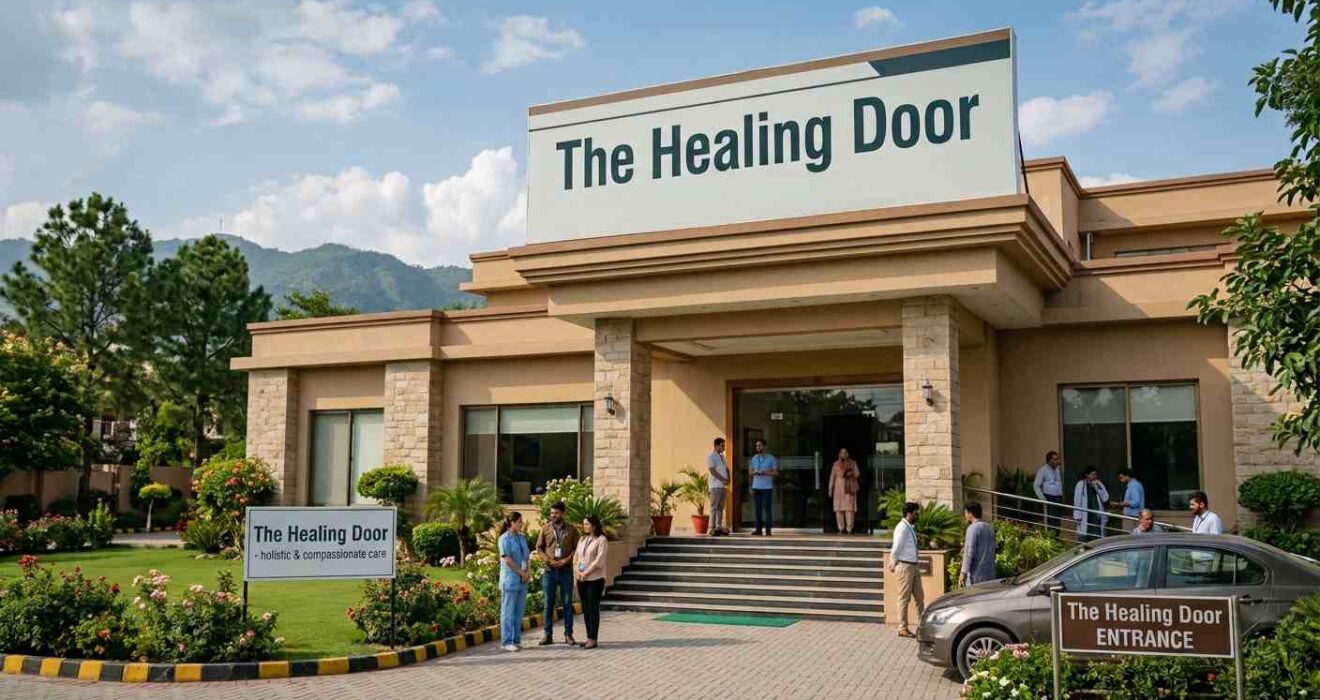
HDRC is located at Opposite Mezan Bank, Main Jinnah Road, Bani Gala, Islamabad.
Conclusion
Ice addiction is a medical condition, not a moral failure, and it responds to properly structured clinical treatment. The families who get the best outcomes are those who act before the situation deteriorates further, choose a center with genuine ice-specific expertise, and commit to the full treatment arc rather than pulling out when the first good days appear.
Healing Door Rehab Center is Islamabad’s most credentialed, psychiatrically equipped facility for ice addiction treatment — with UNODC accreditation, a specialist team that includes consultant psychiatrists, a dedicated ICE Rehabilitation Service, and a residential environment in Bani Gala designed specifically for recovery. If someone you care about is struggling with ice, the most important step is the first one. Call HDRC at +92 314 992 2547, any hour, any day. Real recovery is possible. The right team makes all the difference.
FAQ SECTION
1. What is the best ice addiction treatment center in Islamabad?
Healing Door Rehab Center (HDRC) in Bani Gala, Islamabad is one of the most credentialed facilities for ice addiction treatment in the city. It is accredited by UNODC, approved by IHRA Pakistan, and has a dedicated ICE Rehabilitation Service staffed by consultant psychiatrists and clinical psychologists. It treats both the addiction and any co-occurring psychiatric conditions simultaneously.
2. What is ice drug addiction?
Ice drug addiction is dependence on crystal methamphetamine, a synthetic stimulant that produces intense euphoria by flooding the brain’s dopamine system. It’s highly addictive because repeated use alters how the brain produces and responds to dopamine. Addiction can develop rapidly, often within weeks of regular use, and produces severe psychological and physical withdrawal when stopped.
3. Can ice addicts recover fully?
Yes, full recovery from ice addiction is achievable with appropriate clinical treatment. Recovery requires medically supervised detox, psychiatric management of stimulant psychosis if present, behavioral therapy (CBT/DBT), and a structured aftercare plan. Patients who complete a full residential program and engage with aftercare have significantly better long-term outcomes than those who leave treatment early.
4. How long does ice addiction treatment take?
A minimum residential program of 30 days is considered baseline for ice addiction. In practice, 60 to 90 days produces substantially better outcomes, particularly because the neurological recovery from methamphetamine use takes time even after the patient is physically stable. Aftercare support should continue for at least 6 months post-discharge.
5. What is stimulant psychosis and is it permanent?
Stimulant psychosis is a psychiatric condition that develops from heavy ice use, producing symptoms like paranoia, hallucinations, and disorganized thinking that resemble schizophrenia. It is not permanent in most cases. With proper psychiatric care and sustained abstinence, stimulant psychosis typically resolves within 2 to 6 weeks. This is why having a consultant psychiatrist — not just a counselor — is essential in ice treatment.
6. What is dual diagnosis treatment for ice addiction?
Dual diagnosis treatment addresses both ice addiction and a co-occurring mental health condition simultaneously. Many ice users have underlying anxiety, depression, PTSD, or ADHD that drove their drug use. Treating only the addiction without addressing the underlying condition produces short-term sobriety and high relapse risk. HDRC conducts full psychiatric evaluations and manages dual diagnosis cases as a core part of its program.
7. What happens during ice withdrawal?
Ice withdrawal doesn’t produce the physical dangers of heroin or alcohol withdrawal, but the psychological symptoms are severe. The “crash” phase involves extreme fatigue, prolonged sleep, intense depression, strong cravings, irritability, and sometimes suicidal thoughts. This phase typically lasts 1 to 3 weeks. Medical supervision is important to manage psychiatric symptoms and reduce the risk of relapse or self-harm during this period.
8. Is there a female ice addiction treatment program in Islamabad?
Yes. HDRC offers a dedicated female rehabilitation service in Islamabad with a private, gender-separated environment and female support staff. This is important because barriers to treatment for women in Pakistan often include stigma and privacy concerns. A women-only program in a confidential setting significantly lowers those barriers.
9. How do I get a family member admitted to HDRC for ice treatment?
Call HDRC at +92 314 992 2547, which is available 24 hours a day. No formal paperwork is required for the initial call. The intake team will conduct a clinical assessment to determine the severity of the addiction and appropriate level of care, then guide the family through the admission process. The facility is located in Bani Gala, Islamabad.
10. What does aftercare for ice addiction look like?
Aftercare at HDRC begins before discharge. The clinical team maps the patient’s personal triggers, builds a relapse prevention strategy, educates family members on warning signs, and schedules post-discharge follow-up sessions. The HDRC team remains accessible after discharge for ongoing counseling. For ice addiction specifically, sustained aftercare during the first 90 days is critical because relapse risk is highest in that window.