Addiction Treatment Center Islamabad | HDRC Guide 2026
You’re not reading this because everything is fine.
Someone in your family is struggling. Maybe it’s been going on for months, maybe years, and you’ve reached the point where doing nothing is no longer an option. You searched for an addiction treatment center in Islamabad and found a list of names that all say the same things. “Compassionate care.” “Evidence-based treatment.” “Personalized approach.” None of it tells you what actually happens inside, whether the doctors are real, or whether the person you love will be safe.
That uncertainty is the hardest part of this moment. This guide answers the questions families in Islamabad actually have, tells you what separates a credible rehabilitation center from one that offers a bed but not real treatment, and explains what Healing Door Rehab Center does differently.
Why Most Families Wait Too Long Before Seeking Treatment
Asking for help with addiction in Pakistan carries weight that most families understand quietly. There’s the fear of what neighbors will think. The hope that the person will “sort themselves out.” The belief that it hasn’t gotten bad enough yet. By the time a family contacts a rehabilitation center, the situation has almost always been serious for far longer than anyone wants to admit.
According to data cited by Pakistan Today from a United Nations report, Pakistan has approximately 7.6 million drug users, with the number growing by around 40,000 annually. The vast majority never access formal treatment. That’s not because treatment doesn’t exist. It’s because families don’t know what to look for, or they wait until the crisis forces their hand.
Waiting makes the clinical picture more complex. Longer addiction periods mean deeper physical dependence, which means more difficult detox. They also mean the underlying issues, anxiety, depression, trauma, undiagnosed mental illness, have been buried under the substance for longer. Early intervention produces better outcomes. That’s not a motivational statement. It’s a clinical fact supported by decades of addiction medicine research.
If you’re reading this right now, you’ve already done the hardest thing. You’ve acknowledged that help is needed. The next step is knowing what to look for.
What Actually Happens at a Credible Addiction Treatment Center in Islamabad
A credible addiction treatment center is a medically supervised facility where qualified psychiatrists, psychologists, and addiction specialists assess, stabilize, and treat patients using structured, evidence-based methods. The definition matters because the range of what calls itself a rehabilitation center in Islamabad is extremely wide.
At one end, you have properly accredited facilities with named doctors, clinical protocols, and regulatory oversight. At the other, you have unregulated facilities offering little more than a locked room and cold turkey detox, which is not just ineffective, it can be medically dangerous for certain substances including benzodiazepines, alcohol, and opioids.
The question to ask any facility is not “are you the best.” It’s specific: Who are your doctors and what are their qualifications? Are you registered with IHRA Pakistan? Is detox medically supervised, and by whom? What does a typical week of treatment look like for a patient? What is your aftercare plan at discharge?
A facility that cannot answer these questions concretely is not where your family member should be.
How Healing Door Rehab Center Approaches Addiction Treatment
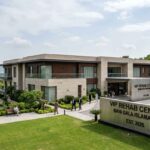
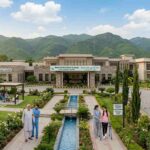
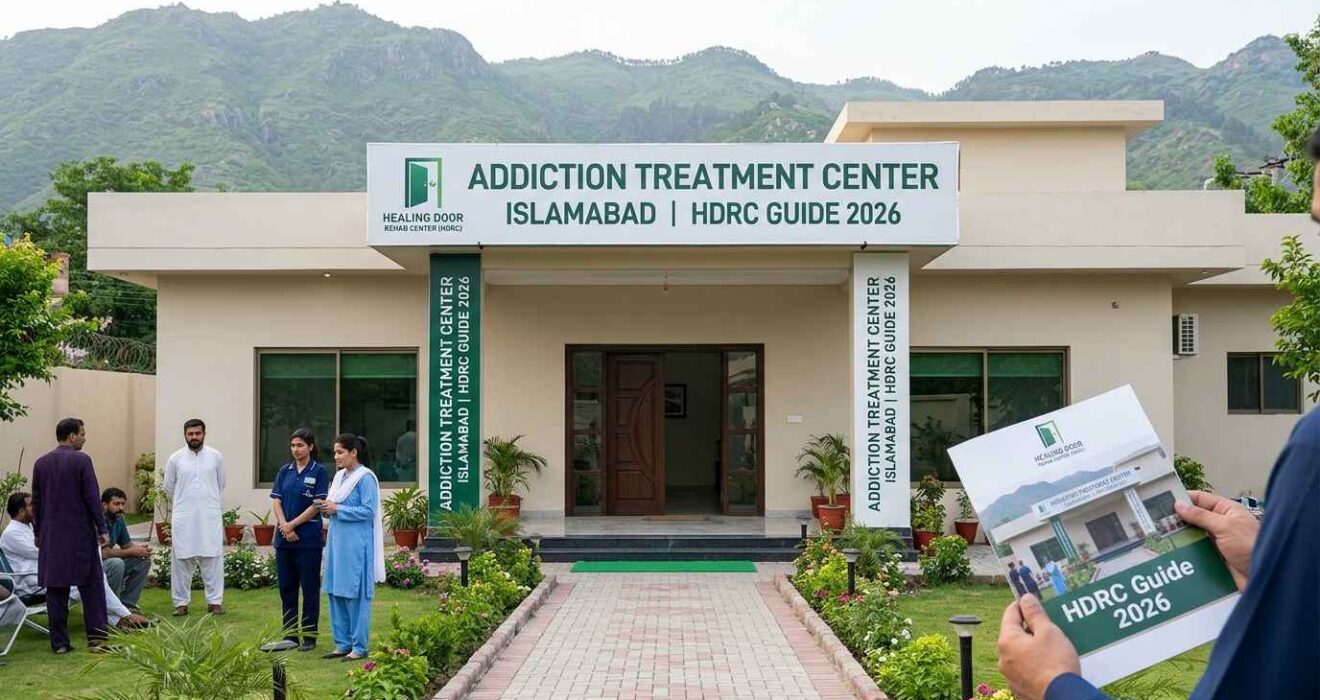
Healing Door Rehab Center, known as HDRC, is located in Bani Gala, Islamabad, and has been operating since 2014. It is accredited by UNODC (United Nations Office on Drugs and Crime) and approved by IHRA Pakistan, the regulatory body overseeing rehabilitation centers in the country. It has been featured on national television programs including Roze News.
These aren’t decorative credentials. UNODC accreditation specifically requires that a facility meets international standards for addiction treatment including clinical assessment protocols, qualified staffing, patient rights, and treatment documentation. Many facilities in Islamabad do not hold this accreditation. HDRC does.
The Clinical Team
The team at HDRC includes named, qualified professionals rather than anonymous “specialists.” Dr. Asad Ali Noor serves as Chief Executive Officer and Consultant Psychologist and Addiction Therapist. Dr. Nasir Mehmood Abbasi is Medical and Addiction Specialist and Director. The psychiatric team includes Prof. Dr. Jan Alam, a Consultant Psychiatrist and Psychotherapist, and Dr. M. Iqbal Khan, Psychiatrist. Clinical psychology is covered by Ms. Aneela Sarfraz and Ms. Ammarah Shaarif, both Consultant Clinical Psychologists and Addiction Specialists.
This matters more than most families realize. A psychiatrist treats what’s underneath the addiction. Anxiety disorders, depression, PTSD, and undiagnosed bipolar disorder commonly drive substance use and are frequently never identified or treated at facilities that focus only on the substance itself. The presence of qualified psychiatrists on staff is not a luxury feature. It’s what makes the difference between short-term detox and long-term recovery.
What HDRC Treats
HDRC provides treatment across the full range of substance use disorders and mental health conditions that commonly present together.
Drug addiction treatment covers heroin, ICE (crystal methamphetamine), cannabis, prescription opioids including tramadol, benzodiazepines including Xanax and sleeping tablets, and pregabalin. ICE addiction has been one of the fastest-growing presentations at rehabilitation centers across Pakistan’s twin cities in recent years, and HDRC runs a dedicated ICE rehabilitation program with specialist protocols rather than a generic drug treatment approach applied to every substance.
Alcohol abuse treatment is handled with medical supervision given the particular risks of alcohol withdrawal syndrome, which at severe levels can be life-threatening without proper clinical management.
Prescription drug dependency deserves specific mention because it is severely underreported in Pakistani families. Tramadol, pregabalin, and sleeping tablets build physical dependence quietly. Many patients and families do not recognize prescription dependency as addiction until withdrawal symptoms appear. HDRC identifies and treats these cases with medically supervised detox protocols designed for the specific withdrawal profile of each substance.
Psychiatric services cover anxiety, depression, schizophrenia, PTSD, and personality disorders. The dual diagnosis program treats addiction and mental illness simultaneously, which is how they actually need to be treated. Treating addiction while leaving untreated depression in place is one of the primary reasons patients relapse after discharge.
HDRC also provides a dedicated female rehabilitation program in a separate, private, all-female environment. This addresses a real barrier to treatment in Pakistan. Women struggling with addiction face compounded social stigma that prevents many families from seeking help. A confidential, women-only program with female clinical staff removes a significant part of that barrier.
The Location in Bani Gala
The facility sits in Bani Gala, away from the urban environments where many patients have their supply chains, social networks, and triggers. For residential patients, this distance is therapeutic rather than punitive. The research on residential addiction treatment consistently shows that removing a patient from their using environment during early recovery produces better outcomes than attempting treatment while they remain within reach of the same triggers and contacts that maintained the addiction.
Inpatient vs Outpatient: Which Is Right for Your Situation
Inpatient rehabilitation means the patient lives at the facility for the duration of treatment. Outpatient rehabilitation means the patient attends structured sessions while continuing to live at home.
Inpatient care is appropriate for most moderate to severe addiction cases, anyone requiring medically supervised detox, patients with a co-occurring psychiatric disorder, patients whose home environment is a source of triggers or where others in the household also use substances, and anyone with previous treatment attempts that ended in relapse.
Outpatient care suits patients with mild to moderate dependence, stable and supportive home environments, and families who are genuinely prepared to be active participants in the treatment process. HDRC offers both options, but the clinical team assesses which is appropriate for each patient’s actual situation rather than recommending one based on cost considerations.
If you’re unsure which applies to your family member, call HDRC at +92 314 992 2547. The team answers around the clock, including nights and weekends, because that’s when families most often reach the point of making this decision.
What the Treatment Process at HDRC Looks Like
Knowing what actually happens from the moment your family member arrives removes some of the fear from the decision.
The first step is assessment. When a patient arrives at HDRC in Bani Gala, the clinical team conducts a full psychiatric and medical assessment. This is not a checklist. It’s a structured evaluation that identifies the substance or substances involved, the duration and severity of dependence, any co-occurring mental health conditions, the patient’s medical history, and the family and social context. That information shapes the individual treatment plan.
Detoxification follows for patients with physical dependence. Medically supervised detox at HDRC is managed by Dr. Shahid Ikram, an MBBS-qualified physician with UTC Advanced training in addiction treatment. Medical supervision during detox is not optional. For opioid, benzodiazepine, and alcohol withdrawal specifically, unsupervised detox carries documented clinical risks. The withdrawal management protocol at HDRC controls the process and manages symptoms safely.
Active treatment runs through the detox period and continues afterward. The therapeutic approach uses Cognitive Behavioral Therapy (CBT), Dialectical Behavior Therapy (DBT), group therapy sessions, and individual counseling. Family sessions are incorporated because addiction does not happen in isolation and recovery doesn’t either. The people around the patient at home will either reinforce recovery or undermine it, and HDRC works directly with families to prepare them for that role.
Aftercare planning begins before discharge. Every patient who leaves HDRC leaves with a specific plan for the months after treatment: identified triggers, relapse warning signs, a support structure, and the ability to contact the team if the situation changes.
What Separates HDRC from Other Rehabilitation Centers in Islamabad
The rehabilitation sector in Islamabad varies significantly in quality. Naming what HDRC offers that many others do not is more useful than vague comparisons.
UNODC accreditation. Most facilities in Islamabad are not UNODC-accredited. This accreditation requires meeting international standards for clinical care, patient rights, and facility management. It involves external oversight rather than self-declared quality.
Named, qualified doctors. The HDRC website lists each clinical team member by name, qualification, and role. This transparency allows families to verify credentials. Facilities that refer only to “our expert team” without naming anyone should be asked directly who the treating doctors are and what their qualifications include.
Dedicated ICE rehabilitation. Pakistan’s ICE addiction problem has grown substantially since 2020 and continues to expand in Islamabad and Rawalpindi. Many general addiction programs apply standard protocols to ICE that were designed for opioids. ICE addiction has a distinct withdrawal and psychiatric profile, and HDRC’s dedicated program reflects that.
Dedicated female program. A private, all-female treatment environment is rare among rehabilitation centers in Islamabad. For families with a female member who needs treatment, this is often the difference between accessing care and not.
Dual diagnosis. Treating addiction and co-occurring mental illness simultaneously, rather than treating the substance first and hoping mental health resolves on its own, produces fundamentally better outcomes. HDRC’s psychiatric team makes this possible.
Fifteen years of operation. HDRC has been running since 2014 in a sector where new facilities appear and disappear regularly. Longevity in this space reflects the kind of outcomes that keep families referring others.
How Much Does Addiction Treatment Cost in Islamabad
Pricing at rehabilitation centers in Pakistan varies widely based on facility quality, duration of stay, and the level of clinical care involved. HDRC offers different treatment packages based on the clinical requirements of each patient.
Contact HDRC directly for current pricing at +92 314 992 2547 or hdrc.rehab@gmail.com. Pricing structures can change, and the appropriate program for your family member depends on an individual assessment that cannot be done in a general article.
What’s worth noting: the cost of ongoing addiction, in health deterioration, family breakdown, financial loss from the addiction itself, and employment consequences, consistently exceeds the cost of residential treatment. The question families sometimes ask is whether they can afford treatment. The more useful question is what the alternative actually costs over the next twelve months.
If Someone in Your Family Needs Help Right Now
HDRC operates 24 hours a day, seven days a week. The emergency line is +92 314 992 2547.
You don’t need a prepared speech. You don’t need to know the clinical terminology or have all the details ready. Families call and say “Mere bete ko help chahiye” and that is enough to begin. The team takes the information from there.
The facility is located opposite Mezan Bank on Main Jinnah Road in Bani Gala, Islamabad. For families coming from Rawalpindi or other parts of the twin cities, the team can help with logistics.
If you’re not ready to call but want to understand the options first, the appointment booking form at healingdoorrehab.com allows you to specify the service type and preferred doctor and request a consultation without committing to anything.
CONCLUSION
Finding the right addiction treatment center in Islamabad is not about finding the center with the best marketing. It’s about finding qualified doctors, verified accreditation, a treatment approach that addresses both the substance and what’s underneath it, and a facility where your family member will be genuinely safe during the hardest weeks of their life.
Healing Door Rehab Center in Bani Gala has been doing this work since 2014. The team is named and qualified. The accreditation is real and externally verified. The programs cover the full range of substances, including ICE and prescription dependency, that families in Islamabad are currently dealing with. For women specifically, a private dedicated program exists that removes a significant barrier to seeking help.
If the person you’re concerned about needs help, the first call costs nothing and commits to nothing. HDRC is available at +92 314 992 2547, around the clock, every day. Visit healingdoorrehab.com to book a consultation or speak to the team directly.
Getting help is not admitting defeat. It’s the first decision that makes everything else possible.
FAQ SECTION
What is the best addiction treatment center in Islamabad? The best addiction treatment center is the one that has qualified, named doctors, verified accreditation from a regulatory body such as IHRA Pakistan, medically supervised detox, psychiatric care for co-occurring mental illness, and a structured aftercare plan at discharge. Healing Door Rehab Center in Bani Gala meets all of these criteria. It is UNODC-accredited, has been operating since 2014, and has a named clinical team including psychiatrists, psychologists, and addiction specialists.
Is there a free rehabilitation center in Islamabad? Government-operated facilities through the Anti-Narcotics Force and the Ministry of Narcotics Control provide free or subsidized addiction treatment in some locations. The ANF operates Model Addiction Treatment and Rehabilitation Centres in Islamabad. However, capacity is limited and waitlists exist. Private accredited facilities like HDRC offer fee-based treatment with programs structured around clinical need rather than availability. Contact HDRC directly for information on pricing and payment options.
How long does addiction treatment take in Islamabad? Treatment duration depends on the substance, the severity of dependence, whether there are co-occurring mental health conditions, and the patient’s response to treatment. A basic detox can take 7 to 14 days. Residential rehabilitation programs typically run 30 to 90 days. Aftercare and outpatient follow-up often continue for 6 to 12 months after discharge. HDRC tailors the duration to each patient’s individual clinical situation rather than applying a fixed-length program to everyone.
What is dual diagnosis treatment and does HDRC offer it? Dual diagnosis treatment addresses addiction and a co-occurring mental health condition simultaneously. Common co-occurring conditions include depression, anxiety disorders, PTSD, bipolar disorder, and psychosis. Many patients have an underlying mental health condition that was never diagnosed and that the substance use was partially managing. Treating only the addiction while leaving the mental illness untreated is a major driver of post-discharge relapse. HDRC has psychiatrists on staff specifically to provide dual diagnosis care.
Does Healing Door Rehab Center treat ICE addiction? Yes. HDRC has a dedicated ICE rehabilitation program. Crystal methamphetamine addiction has a distinct psychiatric and withdrawal profile that differs from opioid or alcohol dependence. ICE commonly causes psychosis, severe sleep disruption, and acute paranoia during withdrawal that require specific clinical management. HDRC’s ICE program uses structured detox, psychiatric management of psychosis where present, and behavioral therapy sequenced for the specific recovery timeline of methamphetamine dependence.
Is there a separate rehabilitation program for women in Islamabad? HDRC operates a dedicated female rehabilitation program in a private, all-female environment with female clinical staff. This program exists because women in Pakistan face compounded social stigma around addiction that prevents many families from seeking help through general admission programs. A confidential, women-only setting with female counselors significantly reduces the barrier to treatment for female patients and their families.